A few days ago, I was at Great Wolf Lodge with my family.
While most people see water slides and themed decor, I automatically shift into what I call facility lens mode.
I notice:
- Rust forming on interior structural
- Caulk separation around plumbing penetrations
- Early-stage carpet fray at stair transitions
- Diffusers that haven’t been cleaned recently
- Minor moisture staining that tells a larger story
Not because I’m critical.
Because I’ve learned something over the years:
Buildings rarely fail suddenly. They whisper before they scream.
And the leaders who hear the whisper are the ones who stay ahead of crisis.
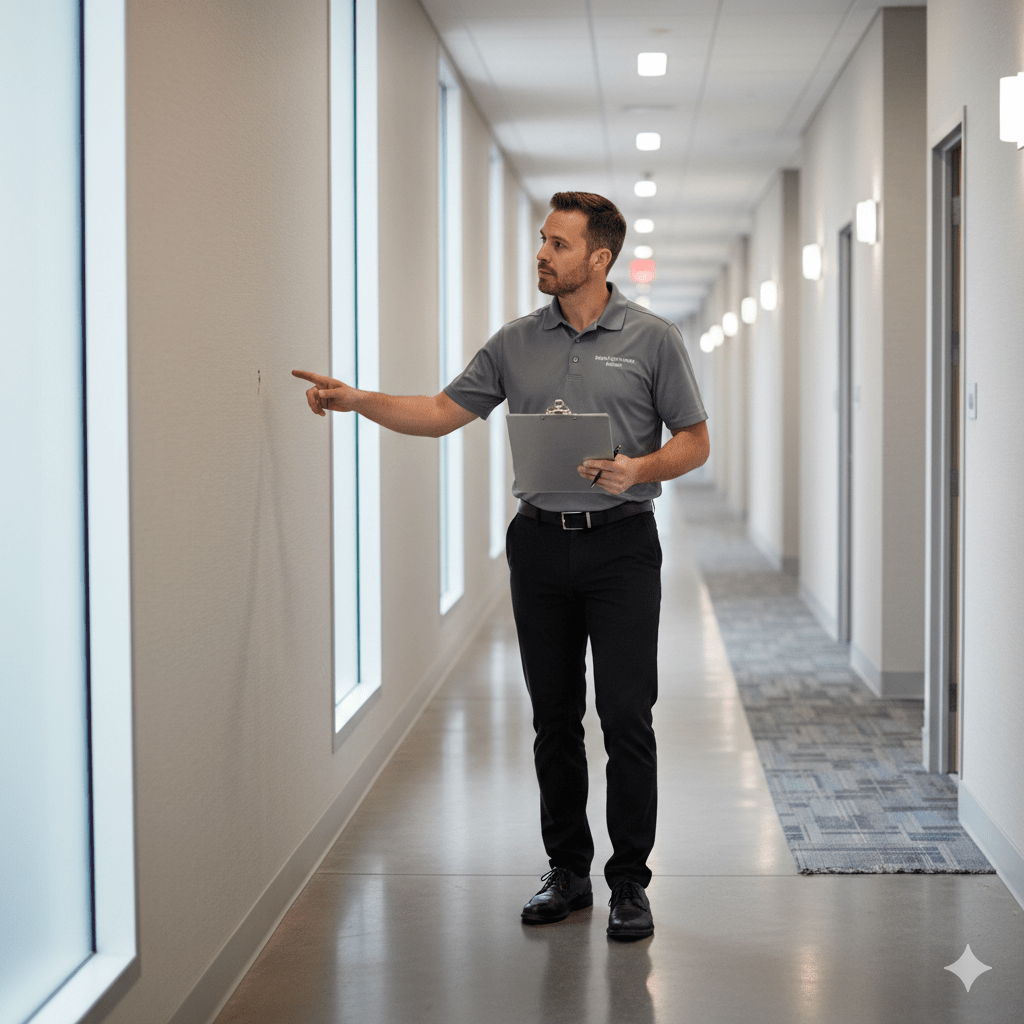
The Problem: Facilities Leadership from Behind a Desk
Most facilities directors are buried in:
- Budget forecasting
- Vendor management
- Capital planning
- Software dashboards
- Email threads
All important.
But the building does not live in your inbox.
It lives in the corners.
The stairwells.
The mechanical rooms.
The unnoticed transitions.
When leaders stop walking their facilities consistently, they lose situational awareness.
And decay accelerates quietly.
The Solution: The Structured Walk + The Master List
A casual walk isn’t enough.
What separates strong facilities leaders from reactive ones is this:
They walk with a system.
Step 1: Maintain a Master Facilities Observation List
This is not your CMMS.
This is your running leadership document.
A living master list that includes:
- Deferred maintenance observations
- Aesthetic concerns
- Safety concerns
- Recurring problem areas
- “Low-hanging fruit” improvements
- Potential future capital issues
Every walk feeds this document.
This keeps you as the central hub of facility awareness.
Step 2: Categorize What You See
Not all issues are equal.
During your walk, mentally sort items into three categories:
1. Immediate Low-Hanging Fruit
Examples:
- Fraying stair carpet strings
- Loose ceiling tile slightly out of place
- Dirty switch plates
- Minor touch-up paint needed
These are quick wins.
Low cost.
High visual impact.
Strong facilities directors have an eye for these.
Aesthetic stewardship builds trust.
2. Operational Work Orders
Examples:
- Minor plumbing leaks
- HVAC diffusers needing service
- Door hardware adjustment
- Lighting inconsistencies
These should move from your master list into your maintenance management system (CMMS or otherwise).
And then — this is key — communicated clearly to your team.
3. Strategic / Subcontractor / Capital Items
Examples:
- Rust forming on exposed steel
- Roofing deterioration
- Drainage issues
- Exterior paint system failure
These require planning.
Budget.
Vendor coordination.
Leadership-level discussion.
If you don’t see them early, they multiply.
The Most Overlooked Leadership Skill: Follow-Through
Walking and listing are useless without execution.
Strong facilities leadership means:
- Entering items into your system
- Communicating expectations clearly
- Confirming completion
- Re-walking to verify quality
Some teams are highly self-directed.
Others require closer oversight.
A good facilities director adjusts their follow-up style accordingly.
Not micromanaging — but ensuring stewardship.
Why This Matters More Than You Think
A facility communicates constantly.
Parents notice.
Donors notice.
Students notice.
Staff notice.
Even if they don’t say it.
Clean stair transitions.
Well-maintained restrooms.
Absence of rust.
Absence of clutter.
These things quietly communicate:
- Competence
- Safety
- Care
- Intentional leadership
Deferred maintenance communicates something too.
A Practical Framework You Can Start This Week
- Block 30 minutes per building.
- Walk without distractions.
- Update your master observation list.
- Categorize what you see.
- Push items into your system.
- Communicate clearly.
- Follow up intentionally.
Repeat weekly.
This discipline alone can dramatically reduce long-term capital burden and reactive spending.
Because buildings whisper long before they fail.
The question is whether leadership is listening.
Many organizations don’t realize what’s being missed until it becomes expensive.
If you’d like an outside facilities lens to help identify low-hanging improvements, deferred maintenance risks, and operational gaps, I offer structured facilities and operations assessments tailored to your environment.
Let’s talk.
 Chastain Facilities & Capital Advisory
Leave a comment